

March 30, 2026 | 3 Minute Read
As a real estate investor, I’m closely watching the private credit stress hitting firms like BlackRock, Apollo, and Tricolor. Liquidity caps and market turmoil could tighten lending, slow refinancing, and reduce available capital.

Why the Private Credit Stress Is Serious
Major alternative asset managers are at the center of today’s private credit market stress, including:
- BlackRock
- Blackstone
- Morgan Stanley
- Ares
- Apollo
- KKR
- JP Morgan
- HSBC / Deutsche Bank exposure through credit facilities
- Blue Owl
- And smaller failures like Tricolor and First Brands in 2025
These firms collectively oversee trillions of dollars in credit and alternative assets — constituting a major segment of the global financial system. While exact totals vary by source, the U.S. private credit market alone is often cited as roughly $1.8 – $2 trillion, and global private credit tied to these asset managers is a substantial portion of that.
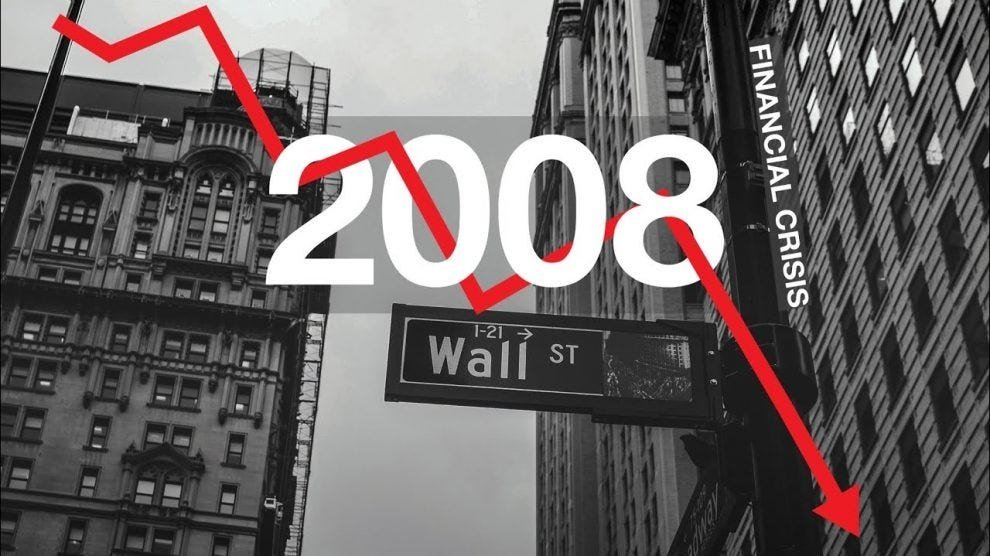
That’s many multiples of the subprime losses in 2007‑08 that triggered a global panic — and those losses cascaded through banks and markets. Compare that to today’s stresses, and the parallels quickly jump out.
Why This Feels Like 2008
Here are the main similarities:
1. Hidden Risk and Opacity
Just as mortgage‑backed securities were misunderstood in 2007, private credit today lacks transparency:
- Many loans are non‑bank and privately issued, meaning regulators and even investors get limited real‑time reporting on defaults or collateral quality.
- Funds invest in illiquid portfolios but offer quarterly liquidity to investors, creating a classic maturity mismatch.
This is similar to how CDOs and MBS masked the true risk of subprime mortgages before 2008.
2. Redemption Stress = Runs on Credit
In 2008, contagion spread when money market investors fled funds, banks tightened lending, and credit froze. Today, funds are limiting investor withdrawals:
- Apollo Debt Solutions capped redemptions at 5% after investors requested 11% — meaning many couldn’t get their cash.
- BlackRock enforced a 5% cap on withdrawals from its HPS Corporate Lending Fund after $1.2 billion was requested.
- Ares also limited redemptions after redemption pressure hit double‑digit requests.
These redemption caps are like a run on a bank — where the supply of liquid cash is smaller than investor demand. That dynamic is reminiscent of the panic phases of 2008.
3. Influential Market Voices Echo the Concerns
Jamie Dimon — CEO of JPMorgan — publicly warned about seeing “cockroaches” in the private credit market, pointing to earlier failures like Tricolor and First Brands as early warning signs.
Other market observers have noted that this is the first real stress test for private credit in a higher‑rate environment, driven by loan defaults and liquidity pressure — just as the U.S. housing sector was tested in 2007‑08.
But There Are Important Differences From 2008
It feels like a crisis — and there are systemic risk signals — but this stress isn’t exactly the same as the Subprime Mortgage Crisis:
Scale and Linkage to Banks
In 2008, toxic mortgage products were deeply woven into global banks’ balance sheets, money market funds, and insurance products like AIG’s credit default swaps — creating direct contagion channels.
Today, private credit is largely outside traditional bank balance sheets and more concentrated in alternative asset vehicles. That means risks are somewhat more contained — at least so far — because banks haven’t yet shown the same level of exposure that mortgage lenders and insurers had before 2008.
What the Markets Are Doing Now
Financial markets are already pricing in stress:
- Many Business Development Companies (BDCs) — which lend to mid‑sized firms — are trading below net asset value due to investor concern.
- Bond spreads on private credit funds widened before recent gating on redemptions, signaling rising perceived risk.
- Large funds have posted losses and increased redemption pressure, contributing to stock price weakness in alternative asset managers.
That doesn’t prove the whole system is falling apart — but it does show the stress isn’t just contained within a few weak issuers.
Bottom Line
Yes, private credit stress reminds people of 2008.
The dynamics — opaque risk, liquidity mismatches, redemption pressure — are similar in structure. Recent blowups, redemption caps, and markdowns feel like contagion building in the financial system.
But the situation isn’t identical.
Private credit hasn’t yet penetrated banks and public markets to the same extent that subprime mortgages did. Some analysts argue the stress is part of a re‑pricing and structural adjustment, not a full systemic collapse — yet.
The real question isn’t “Is this exactly 2008?”
It’s: Are we ignoring the early warning signals at our own peril?