

May 18, 2026 | 5.5 Minute Read
Years ago, I bought a rental property that easily passed the “2% Rule.” The monthly rent was more than 2% of the purchase price, which many investors view as a strong indicator of cash flow.
I still lost money on the deal.

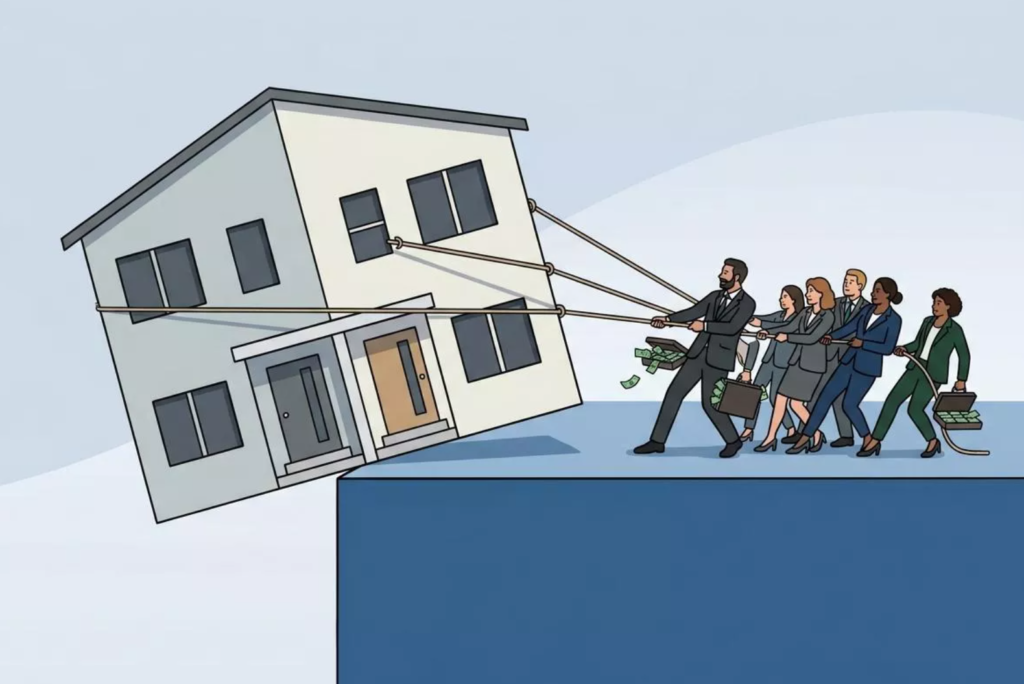
That experience taught me an important lesson: positive cash flow alone does not guarantee a good investment. A property can look excellent on paper and still underperform because of hidden expenses, poor management, weak market fundamentals, or limited exit strategies.
As you grow as a real estate investor—whether active or passive—you have to evaluate deals holistically instead of focusing on cash flow alone.
Tax Benefits Matter
Some investments generate strong income but offer little or no tax advantages. That is not necessarily a problem, but it is a trade-off investors need to understand.
The positive tax advantages can offset income from other investments and dramatically improve overall returns.
Cash flow is important, but after-tax returns matter even more.
Hidden Expenses Can Destroy Cash Flow
Not every expense shows up clearly in a spreadsheet or pro forma.
That was exactly what happened with my “2% Rule” property. On paper, the numbers looked fantastic. In reality, the property suffered from being in a class D area, theft, frequent tenant turnover, and a difficult tenant base. The hidden costs destroyed the cash flow.
A property can show positive cash flow on paper, but if its condition, taxes, insurance, or tenant base are working against you, that cash flow can disappear quickly.
Many new investors underestimate these “invisible” expenses. They focus on projected rent while ignoring the operational realities that determine whether a property actually performs.
Unexpected Repairs Can Wreck Returns
Every experienced investor eventually discovers surprises that can become very expensive.
I once purchased a property only to learn that we had to not only replace the septic but all the copper had been stripped out during renovations. Needless to say, that deal became far more expensive than expected.
A rental may look good financially, but if the home is drafty, poorly insulated, or has old mechanical systems, those issues can turn into tenant complaints, higher utility costs, and future repair expenses.
Smart investors evaluate the long-term condition of a property, not just the current numbers.
Real Estate Is a Long-Term Commitment
Rental properties are rarely short-term investments.
Closing costs alone can consume tens of thousands of dollars between buying and selling. To overcome those costs, investors usually need years of cash flow and appreciation.
I do not mind long-term investments. But time and liquidity still matter.
Some investments require shorter holds and offer different risk-reward profiles.
Holding investments across different timelines is one of the ways I diversify my portfolio.
Multiple Exit Strategies Reduce Risk
One of the biggest weaknesses in many cash-flow-focused properties is the lack of exit options.
That “2% Rule” property I mentioned earlier had a major problem: I could not realistically sell it to a retail homebuyer. Very few buyers in the neighborhood qualified for traditional financing. My only realistic exit was selling to another investor.
Safer investments usually offer multiple paths to profitability.
The more exit strategies a property offers, the more resilient the investment becomes.
Market Fundamentals Always Matter
Strong markets create stronger investments. Weak markets create weaker ones, regardless of the projected cash flow.
If a market suffers from declining population growth, weak employment, high crime, or deteriorating community conditions, investors often struggle with appreciation, tenant quality, and resale demand.
Sometimes the best deal is not the one with the highest cash flow on Day 1, but the one in an area where buyers and renters both want to be long term.
Long-term demand creates flexibility. It also creates multiple ways to win.
Property Management Can Make or Break a Deal
Even strong investments can fail under poor management.
I have seen excellent property managers rescue struggling deals. I have also watched bad management destroy perfectly good investments.
Whenever I evaluate a deal, one of our first questions is:
“Who is managing the property, and how long have they worked together?”
I care far more about the operator’s relationship with the management team than whether the management is in-house or outsourced. Experience and consistency matter.
Financing Structure Is Critical
Real estate deals typically fail for one of two reasons: the operator runs out of money or runs out of time.
After 2022, many operators got into trouble because they relied on floating-rate debt. Rising interest rates turned previously profitable deals into negative cash flow properties almost overnight.
Others faced a different problem. Their short-term bridge loans matured before they could refinance or sell. Even properties with decent cash flow became distressed because financing conditions changed.
It is important to remember that a property can still lose money even while producing positive monthly cash flow.
Final Thoughts
Cash flow absolutely matters. I enjoy receiving passive income distributions as much as anyone.
But cash flow alone is not enough.
The best investors look beyond the spreadsheet. They evaluate market fundamentals, hidden expenses, financing structure, property management, tax advantages, and exit strategies before committing capital.
When you analyze deals holistically instead of chasing yield alone, you put yourself in a far better position to survive market shifts and build long-term wealth.