

April 20, 2026 | 4 Minute Read
Over the past few weeks, I shared how an Airbnb guest caused significant damage to one of our properties after a six-month mid-term stay. That situation resulted in more than $19,000 in repairs before the property could be brought back online as a short-term rental.


You can read more here:
.
The takeaway from that experience was simple but important: while mid-term rentals (28+ days) are highly attractive due to reduced turnover and strong occupancy, they also require tighter operational safeguards. Without structure, the downside risk can be significant.
SHORT-TERM VS LONG-TERM
It’s important to zoom out.
We only operate nine short-term rental properties. That’s a small portion of our overall rental portfolio, which is primarily long-term housing.
Long-term rentals behave very differently. They provide predictable monthly income and require far less day-to-day involvement. That stability is both the biggest advantage—and a hidden weakness.
Because once a tenant is placed, the property effectively shifts into “hands-off” mode unless systems are in place to monitor it.
OUR LTR SCREENING PROCESS
Before placing any long-term tenant, we run a consistent screening process:
- Credit and background checks
- Income verification
- Rental history and landlord references
.
We apply the same framework to Section 8 tenants as well.
And there are real advantages to Section 8:
The Upside:
- In many cases, Section 8 covers 100% of rent, eliminating collection risk
- Average tenancy duration is around 5 years—some of our tenants have stayed 8+ years
- Lower turnover reduces vacancy and rent loss
The Downside
Of course, there are downsides:
- Property care is inconsistent
- Lease rules are not always followed (smoking, unauthorized pets, etc.)
.
Despite that, our overall experience with Section 8 tenants has been largely positive, especially when systems and expectations are enforced consistently.
SETTING EXPECTATIONS
On move-in day, I personally meet the tenant at the property. We complete a full inspection and document the current condition in detail.
This step serves two purposes:
- It sets expectations clearly from day one
- It protects both parties when the lease ends
At that point, our responsibility is straightforward:
- Tenant receives keys at move-in
- Property management handles maintenance during occupancy
- I return only for final inspection at move-out
.
Everything else is handled through established systems.
I also make one key point very clear: the property must be returned in the same condition it was delivered, normal wear and tear excluded.
Before I leave, I reinforce three rules:
- Treat the property like your home and report maintenance issues early
- All maintenance requests must go through the tenant portal—not informal calls or texts to me
- Rent must be paid on time, even when the tenant portion is small
x
That last point matters more than most people think. Even small delinquencies create unnecessary friction and administrative overhead.
THE TURNOVER THAT DIDN’T GO WELL
Recently, we had one of our Section 8 tenant vacate the property after five years.
At lease renewal, the rent increased from $1,350 to $1,450. Previously, Section 8 covered the full amount. After recertification, Section 8 now covered $954, leaving the tenant responsible for $496 per month.
She could not afford the difference and provided notice to vacate.
TENANT DEPARTURE
This is where things broke down.
When maintenance arrived to do a standard turnover, we found:
- Furniture and belongings were left behind
- The home was not cleaned
- Five windows were broken
- Water intrusion occurred through the damaged windows, leading to drywall damage
- One window had vegetation growing inside
- Flooring was damaged
.
Here’s a YouTube of Before and After of the property.
The tenant never reported the broken windows, likely to avoid responsibility. Unfortunately, that delay made the damage significantly worse.
Replacing the windows alone is approximately $1,500, not including drywall, paint, and interior repairs. This tenant did not want to report it so she lived like this for who knows how long in order to avoid paying for damages.
THE FINANCIAL IMPACT
We are now facing roughly $10,000 in repairs over a 2–3 week period.
That means:
- No rental income. No cash flow
- Mortgage payments coming directly out of pocket
- Additional costs for marketing, screening, and onboarding a new tenant
x
And even after everything is repaired, we are looking at a 3 month vacancy.
RETURN ON HOLDING PERIOD
This is where the math matters.
Over five years, this property generated approximately $250/month in net cash flow. That totals $15,000.
After this incident, expected repairs reduce that effective profit to roughly $5,000 over five years—or about $83/month.
In other words, the property has essentially moved from a strong performer to near break-even status due to a single turnover event.
And the worst-case scenario? We could have easily ended up in a negative position after five years.
NEW SYSTEMS
This experience reinforces a critical operational truth:
If you don’t actively inspect, you eventually inherit the damage.
Going forward, we are implementing quarterly inspections across our portfolio, framed primarily as routine maintenance (such as HVAC filter replacement).
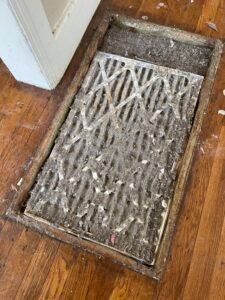
Most tenants never change their air filters, which can also lead to costly HVAC issues over time—so the inspections serve both purposes.
Here’s a photo of the air filter at this property. I doubt the tenant ever changed the air filter in the five years she was there.

Each quarterly visit will include:
- Air filter replacement
- Exterior maintenance checks (weeds, shrubs, general upkeep)
- Documentation of tenant-caused damage and billing when applicable
- Lease renewal evaluation based on property condition and tenant behavior
x
Most importantly, this creates accountability.
Some tenants will not adjust their habits simply because they are asked to. They live how they live. The only effective lever is not renewing their lease.
FINAL THOUGHT
We should have implemented this system earlier.
The cost of inaction is clear: one bad exit can erase years of otherwise stable returns.
This isn’t about being stricter for the sake of it—it’s about protecting long-term asset performance.
At this point, anything less than proactive oversight is no longer a viable strategy.
Hopefully, these changes ensure we don’t repeat this cycle again.