

August 31, 2026 | 6 Minute Read
I started buying rental properties here in Birmingham in 2015, when the market was still recovering from the 2008 crash.
At the time, we were buying decent single-family homes around Birmingham for roughly $18,000 to $25,000.
But here’s the interesting part.


Back in September 2011, when I first moved to Birmingham from Fort Lauderdale, I was buying many of those same types of houses for just $8,000 to $12,000.
So why didn’t I start buying rental properties in 2011?
Great question.
The simple answer is that I had other priorities.
When I moved to Birmingham in 2011, I was carrying approximately $1.5 million in debt as a result of the 2008 financial crisis. My FICO score was below 500.
But that’s a story for another day.
From 2011 through 2015, my entire focus was flipping houses.
And I flipped a lot of them.
I wholesaled properties, bought and flipped houses myself, and used my real estate license to earn commissions helping other investors buy and sell properties.
My primary goal wasn’t to build a massive real estate portfolio.
It was to get out from underneath a mountain of debt.
Over those four years, I used the money I earned to pay off almost all of my debt. For the remaining balances, I negotiated settlements, sometimes paying pennies on the dollar, and eventually paid everything off.
By the end of 2015, I was debt free.
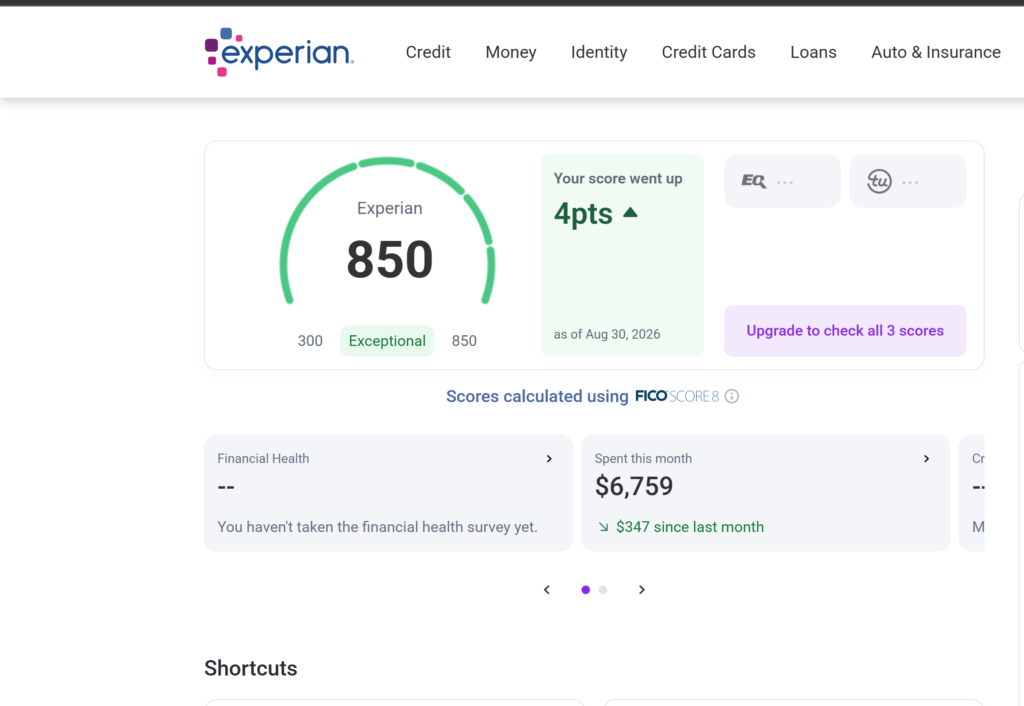
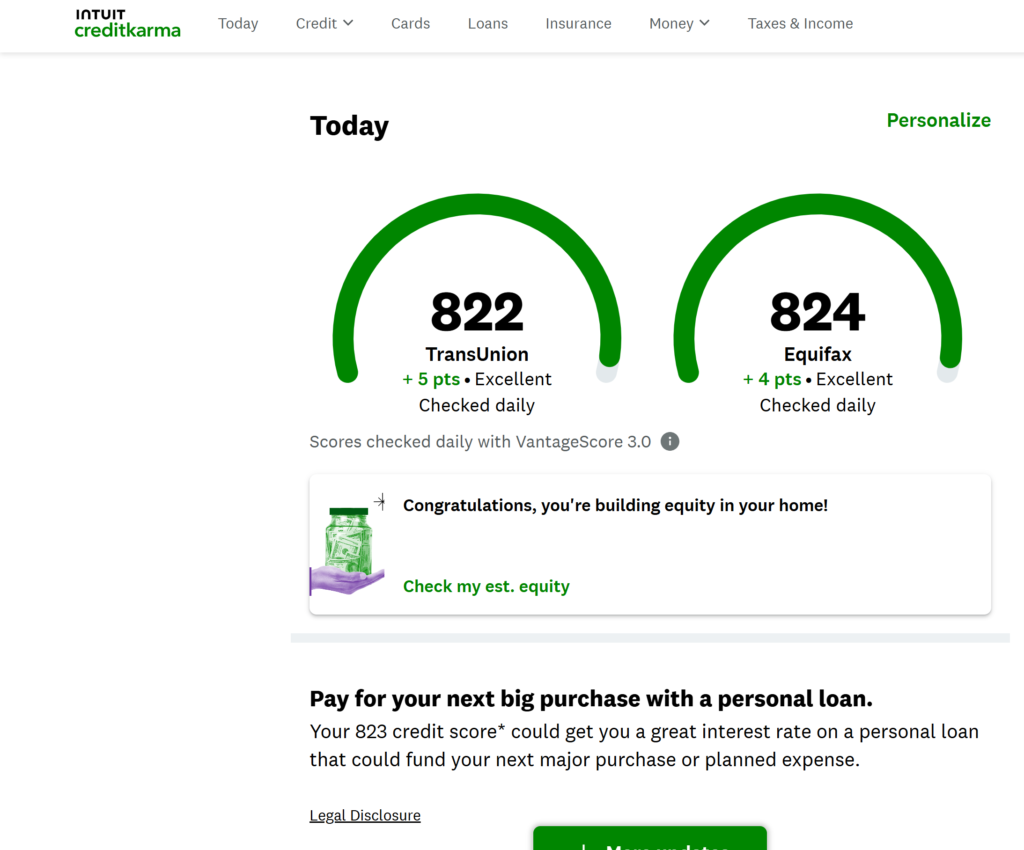
My financial situation had completely changed. My FICO score eventually climbed above 800 and stayed there. Today I have a perfect score of 850 with Experian, 824 with Equifax and 822 with Transunion.


Now that the debt was gone, it was time to start acquiring rental properties.
My business partner and I went on a buying frenzy.
By 2020, we owned as many as 100 rental properties.
But owning that number of rentals taught me two very important lessons.
A large portion of our portfolio consisted of lower C-class properties.
These properties produced excellent cash flow. We’re talking about cap rates in the 15% range in some cases.
The problem was equity.
While the cash flow was attractive, building significant equity in many of these neighborhoods was difficult.
Then 2020 happened.
During the pandemic, property values increased dramatically. Suddenly, many of those lower-end properties had accumulated substantial amounts of equity.
I wasn’t sure how long those valuations would last—or whether we would ever see them again.
So we decided it was a good time to sell.
Some properties were sold turnkey to other investors. Others had accumulated so much equity that we decided to sell them retail to owner-occupants.
For those properties, we would vacate the tenants, make the necessary repairs and upgrades, and then list the properties through my brokerage.
Today, our portfolio consists of approximately 40 rental properties including 9 short term rentals, along with a 24-unit multifamily property that we’re currently renovating.
Over the next several years, we’re also planning to transition into a build-to-rent strategy.
We’re starting with a few houses and two fourplexes on lots we already own. Eventually, we plan to develop approximately 150 garden homes and townhomes across 22 acres that we own.
Our goal is to have the entire development completed by 2030. We will sell off 25% of them to reduce our debt burden and keep the rest in our rental porfolio.
So, after more than 10 years of owning rental properties, what have I learned?
It really comes down to two lessons.
Lesson #1: We Owned Too Many Lower-End Rentals
Buying lower C-class properties can produce excellent cash flow.
We certainly proved that.
But cash flow isn’t the only thing that matters.
One of the biggest problems we experienced was the condition of the properties after tenants moved out.
Lower-end properties tend to attract lower-income tenants, and unfortunately, some tenants don’t treat the property as if it were their own.
When they eventually move out, you may find yourself facing another major renovation.
We’ve had tenants move out and leave us with as much as $15,000 in repairs.
There goes the rental income collected during the entire occupancy term.
Then there are the security issues.
We’ve had HVAC units stolen, houses stripped of copper, broken windows and other problems occurring when properties are vacant.
Today, we approach vacant properties very differently.
We install Wi-Fi security cameras on the front and back of the property.
Since implementing that system, we’ve had zero security issues.
Our rental strategy has changed.
Today, we focus primarily on B-class neighborhoods where we can still generate decent cash flow while owning properties in better areas with greater potential for long-term appreciation.
It’s not that you can’t make money with lower-end rentals.
You can.
But you have to look beyond the cap rate.
You need to consider tenant quality, maintenance, turnover costs, security, neighborhood stability and the potential for future appreciation.
A property producing a 15% cap rate doesn’t look nearly as attractive if you have to spend $10,000 to $15,000 renovating it every time a tenant moves out.
Sometimes the higher-quality property with a lower initial yield can be the better investment.
Lesson #2: Don’t Take on Too Much Debt
I learned this lesson from another investor I met back in 2012.
I’ll call him Ike.
Ike owned more than 100 rental properties, and I was helping him sell several of his properties as a real estate agent.
The problem was that Ike had essentially turned his rental portfolio into an ATM.
Whenever he built up equity, he would refinance and pull money out.
Eventually, he became so highly leveraged that he didn’t have enough cash flow or reserves to properly maintain his properties.
Most of his properties were in C- and D-class neighborhoods.
When I visited some of them before putting them on the market, I was shocked by their condition.
The properties needed significant repairs, but Ike didn’t have the money to make them.
That stuck with me.
Why We Maintain a 75% LTV
Over the past decade, we’ve refinanced our existing rental portfolios twice.
Both times, we were able to pull out equity because the properties had appreciated and we had built substantial equity.
In total, we’ve pulled approximately $800,000 in equity from our properties while maintaining roughly a 75% loan-to-value ratio.
Could we have borrowed more?
Absolutely.
Some lenders were willing to go to 80% LTV witht a higher interest rate.
But we didn’t want to become overleveraged.
That extra 5% may not sound like much, but it can have a significant impact on monthly cash flow.
And what happens when something major goes wrong?
What if an HVAC system needs to be replaced?
We’ve had that happen.
A replacement can easily cost $7,000 or more for us in our market.
If you’ve borrowed every dollar of equity out of the property, where does that repair money come from?
That’s why I prefer to leave equity in the property.
Maintaining a 75% LTV means we’re not maximizing leverage and at the lower interest rate, we have significant cash flow to cover unforeseen expenses.
We’re maximizing our financial cushion.
That cushion gives us room to deal with unexpected repairs, vacancies and market fluctuations.
What Happens When the Market Dips?
Leverage becomes especially dangerous when property values decline.
Imagine an investor owns a $200,000 property and has borrowed $180,000 against it.
On paper, they still have $20,000 in equity.
But what happens if the property needs to be sold quickly?
Selling costs, commissions, repairs and other expenses can easily consume that remaining equity.
If property values decline at the same time, the investor can quickly find themselves with little or no equity—or even owing more than the property is worth.
That’s the risk of excessive leverage.
I would rather have a little less cash in my pocket today and have a substantial equity cushion protecting the investment.
Cash Flow Is Important. So Is Staying in the Game.
Today, our rental portfolio is well balanced.
The properties generate cash flow, we have substantial equity, and we’re not dependent on constantly refinancing or selling properties to stay afloat.
Matter of fact, we will not seek to refinance these portfolios again or sell them… ever.
Or, until I retire and decide it’s time to move on to the next chapter of my life. Cashing out my 50% ownership of the company should leave a nice retirement cushion for myself and my wife.
And even if the market takes a significant dip, our tenants are still paying rent… and the mortgages.
That’s one of the biggest advantages of owning quality rental properties with reasonable leverage.
We also have very little turnover.
We may only have one or two vacancies a year across the portfolios, and our average tenant stays approximately seven years.
Why?
We take care of our tenants.
And we take care of our properties.
There’s an interesting question I ask every prospective tenant who contacts me about one of our available rentals:
“Why are you moving?”
Nine times out of ten, the answer is some variation of:
“My landlord won’t make repairs.”
The HVAC doesn’t work.
The roof is leaking.
There’s mold in the bathroom.
The property hasn’t been maintained.
And the list goes on.
In many cases, the problem isn’t that the owner or landlord doesn’t know what needs to be fixed.
The problem may be that they don’t have the money to fix it.
And that often tells me one thing:
Overleveraged.
After more than a decade of owning rental properties, I’ve learned that successful rental investing isn’t just about finding the highest cap rate or buying as many properties as possible.
It’s about building a portfolio that is well balanced.
Today, I’d rather own fewer properties in better neighborhoods, maintain reasonable leverage, keep substantial equity in the properties and take care of my tenants.
Because the goal isn’t simply to make money when the market is going up.
The goal is to still be standing when the market goes down.