

June 22, 2026 | 3 Minute Read
One of the most persistent debates in real estate investing is whether you should prioritize cash flow or appreciation. It’s a question that shows up repeatedly among investors at every level—from beginners buying their first rental to operators managing hundreds of units.

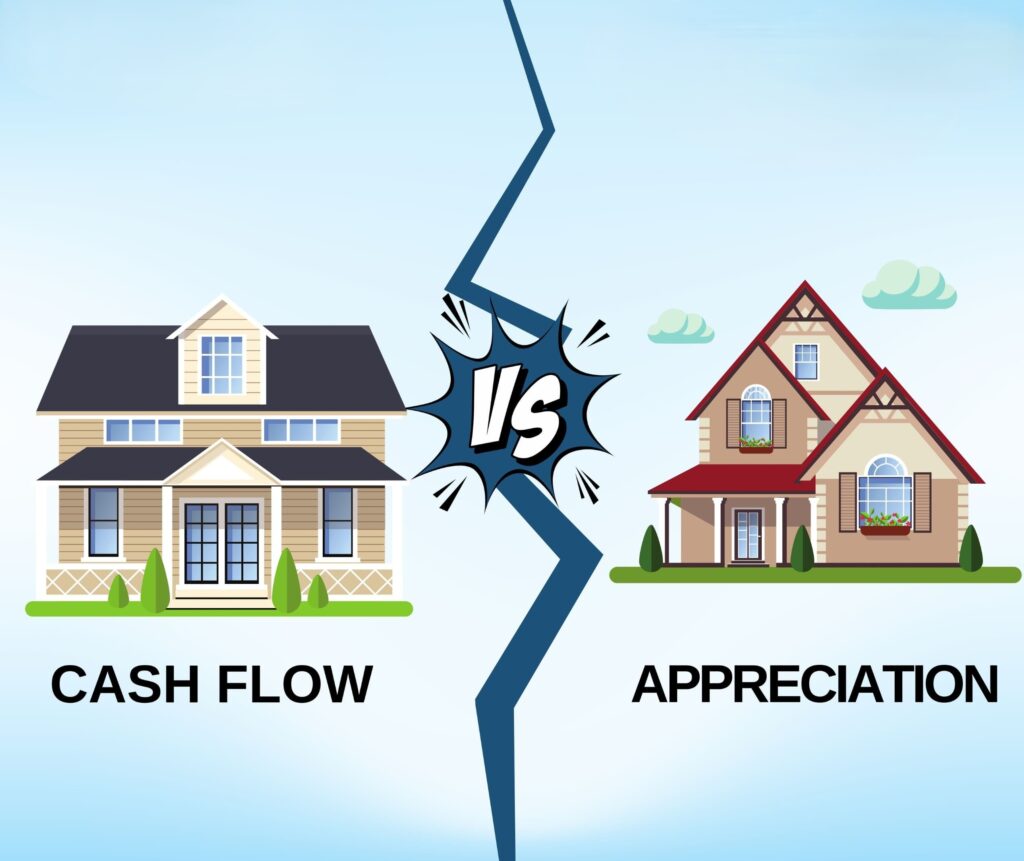
There is no universal “right” answer. Instead, the decision depends on strategy, market conditions, risk tolerance, and where you are in your investing journey.
The Two Schools of Thought
1. The Cash Flow First Investors
This group argues that cash flow is the foundation of real estate investing.
Their core belief is simple:
- If a property doesn’t produce monthly income, it becomes a liability
- Cash flow protects investors from vacancy, repairs, and market downturns
- Positive monthly income allows you to scale and survive downturns
.
In their view, appreciation is unpredictable and should be treated as a bonus—not a plan.
A common theme from this camp:
“Cash flow keeps you in the game. Without it, you eventually run out of capital.”
They often invest in:
- Midwest or secondary markets
- Higher cap rate areas
- Lower purchase price, higher yield properties
.
2. The Appreciation First Investors
The opposing view is that wealth in real estate is primarily created through appreciation and equity growth.
This group emphasizes:
- Long-term property value growth
- Forced appreciation through renovations and rent increases
- Mortgage paydown as a hidden wealth engine
- Refinancing equity to recycle capital
.
Their argument is that cash flow alone builds income, but appreciation builds wealth at scale.
A common perspective:
“Cash flow keeps you afloat, but appreciation is what creates real wealth.”
They often invest in:
- High-growth metropolitan markets
- Supply-constrained areas
- Higher price-point neighborhoods with stronger long-term demand
.
Income vs. Wealth
The debate ultimately comes down to two different goals:
- Cash flow = stability and survivability
- Appreciation = long-term wealth acceleration
.
Cash flow investors prioritize risk management and liquidity. Appreciation investors prioritize leverage, compounding equity, and long-term exits.
Both are valid—but they solve different problems.
What Experienced Investors Actually Do
A major takeaway from the discussion is that most experienced investors eventually stop treating it as an either/or decision.
Instead, they shift toward a blended approach:
Early Stage Investors
- Prioritize cash flow
- Focus on survivability and learning
- Avoid negative or break-even deals
.
Growth Stage Investors
- Balance cash flow and appreciation
- Start incorporating forced appreciation strategies
- Use equity for refinancing and scaling
.
Advanced Investors
- Optimize for total return:
- Cash flow
- Appreciation
- Loan paydown
- Tax benefits
- Use portfolios strategically across multiple markets
.
The real metric isn’t cash flow or appreciation—it’s total return over time.
The Risk Most Investors Miss
The biggest mistake in this debate is assuming appreciation is guaranteed.
Unlike cash flow:
- Appreciation is market-dependent
- It can reverse quickly in downturns
- It cannot be controlled directly
.
Meanwhile, cash flow is:
- Immediate
- Measurable
- More controllable through underwriting
.
This is why many investors argue:
- Cash flow reduces risk
- Appreciation increases upside
.
A More Practical Framework
Instead of choosing one side, many investors evaluate deals through this lens:
- Can the property survive on its own? (Expenses, vacancy, debt coverage)
- Does the market support long-term appreciation (Job growth, supply constraints, demand trends)
- Can you force equity growth? (Rehabs, rent increases, operational improvements)
- What is the total return over 5–10 years?
.
This removes emotional bias and replaces the debate with math.
If you were forced to choose only one:
- Cash flow makes you resilient
- Appreciation makes you wealthy
.
But in practice, the most successful investors don’t choose—they sequence and balance both across their portfolio and market cycles.
The real edge in real estate isn’t picking sides.
It’s knowing when to prioritize stability—and when to bet on growth.