
May 25, 2026 | 3.5 Minute Read
I love mid-term rentals. These are guests who stay 30 days or longer at one of our properties, and they have become one of the best strategies for maximizing occupancy and reducing operational costs in our short-term rental business.
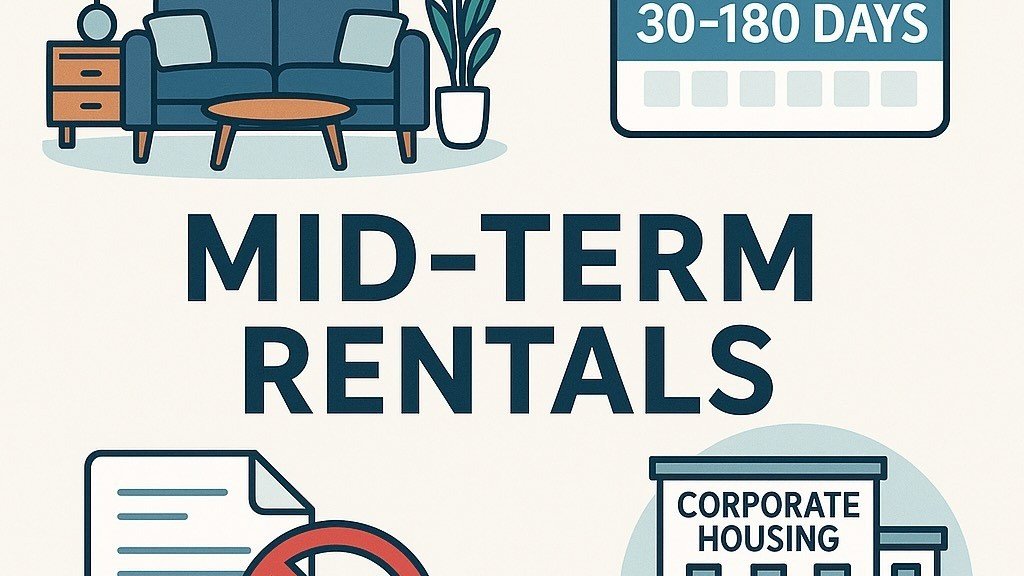
With mid-term guests, we typically get:
- 100% occupancy for the duration of the stay
- Monthly guest fees
- No turnover between guests
- No additional housekeeping costs
- No constant resupplying of consumables
.
Most of our mid-term guests are either displaced homeowners placed by insurance companies after property damage claims or corporate clients needing housing for employees working in town temporarily.
Right now, four of our short-term rentals are occupied by mid-term guests. Three are corporate bookings, and one is an insurance relocation placement.
How We Find Mid-Term Rental Guests
We source mid-term rental guests several different ways:
- Airbnb and VRBO inquiries
- Repeat guests who book directly with us
- Insurance relocation companies
.
The relocation companies have been especially valuable. We currently work with 22 different relocation services that place displaced homeowners into temporary housing.
When they need accommodations, they email us with the requested dates. We respond quickly with availability, negotiate the monthly rate, sign the agreement, and the guest usually moves in shortly afterward.
In many cases, displaced homeowners want to tour the property beforehand. We always accommodate that request, and once they see the home, they almost always approve the accommodations through their insurance company.
Almost always.
The Mid-Term Rental Deal That Fell Apart
On May 12th, a relocation company contacted me about a displaced homeowner needing a minimum two-month stay, with the possibility of extending month-to-month afterward.
The homeowner had a serious mold issue in her home, so I estimated the stay would likely last two to three months.
She contacted me directly but could not tour the property immediately because we had guests occupying it through May 18th. Since she lived nearby, she drove past the property, reviewed the Airbnb listing online, and approved it without seeing the interior.
She loved the house and informed her insurance company she wanted it.
After several days of review, the insurance company approved our negotiated monthly rate of $4,750 on May 18th.
At that point, I removed the listing from Airbnb and VRBO.
Why I Delist Properties for Mid-Term Guests
I do not simply block off dates for mid-term rentals—I completely delist the property.
Why?
Because nearly every mid-term guest we have hosted eventually extends beyond their original end date. If I leave future weekends open and someone books a short stay later, it could force the mid-term guest to move out temporarily, which creates major problems.
Delisting guarantees availability and flexibility for long-term extensions.
Or at least, that was the plan.
The Expensive Mistake
Once the insurance company approved the rate and immediate occupancy was scheduled for May 22nd—right before Memorial Day weekend—I assumed the deal was finalized.
All that remained was signing the rental agreement and moving in.
Then the guest requested an interior showing.
We scheduled the tour for May 21st.
After viewing the property with her daughter, she told me she needed time to think about it because they had become comfortable staying in their hotel.
That was the moment I realized this deal might fall apart.
I was frustrated because I had already removed the property from Airbnb and VRBO during one of the busiest weekends of the year. Every one of our other properties had been fully booked for over a week, and this property likely would have generated more than $1,000 in Memorial Day weekend bookings alone.
I immediately relisted the property Friday morning hoping for a last-minute reservation while still blocking future dates in case she decided to proceed after the holiday weekend.
No bookings came.
Then on Saturday morning, I received the text message:
“Good morning. We have decided to stay at the hotel. My kids love their privacy and accommodations there. Thank you for your time.”
The insurance company and relocation company had already approved everything and were simply waiting for the signed agreement before issuing payment.
But the guest walked away.
Lessons Learned
This was the first time something like this has happened after hosting more than 50 mid-term rental guests over the past several years.
Most displaced homeowners are eager to leave hotels and move into a fully furnished home. This family preferred staying in three separate hotel rooms instead.
It was an expensive reminder that nothing is finalized until the agreement is signed and the guest commits.
Going forward, I will no longer delist properties during mid-term rental negotiations until:
- The guest has toured and approved the property
- The monthly rate has been approved
- The rental agreement has been signed
If new short-term bookings come in during negotiations, the mid-term occupancy date will simply begin after the last confirmed reservation.
This mistake likely cost us over $1,000, but it also improved our process moving forward.